
Continuous code quality analysis helps organizations identify maintainability issues, security vulnerabilities, and technical debt early in the software development lifecycle. By integrating automated code analysis tools such as SonarQube into development workflows, teams can improve software quality, accelerate delivery, reduce rework, and lower the total cost of ownership.
This article explores how continuous code quality analysis improves software delivery, reduces technical debt, and enables more reliable software releases.
What is Continuous Code Quality Analysis?
Continuous code quality analysis is the practice of automatically evaluating source code for maintainability, reliability, security vulnerabilities, and technical debt throughout the software development lifecycle. It provides developers with immediate feedback, helping organizations improve software quality, reduce risk, and accelerate delivery.
How Poor Code Quality Becomes a Software Delivery Risk
Unpredictable Changes and Declining Confidence
A small code change broke multiple unrelated modules – and no one could immediately explain why. Deployment was delayed, not because features weren’t ready, but because the team no longer trusted the codebase. As the codebase grew, even routine updates began to feel risky. Small modifications started triggering unexpected issues in unrelated areas, and release cycles slowed as teams added extra validation before deployment. Nothing appeared fundamentally broken, yet confidence in the system was steadily declining.
Common Causes of Technical Debt and Software Quality Issues
A closer look revealed the cause was not a single flaw, but the steady accumulation of technical debt: duplicated code, inconsistent patterns, and areas where security vulnerabilities could go unnoticed. Manual code reviews were helpful but inconsistent. Reviewers spent significant time identifying structural or style issues rather than discussing design decisions. Automated checks existed but mainly verified whether code compiled: they did little to surface deeper maintainability risks or security weaknesses. Over time, these small inefficiencies compounded and began affecting delivery speed, reliability, and the confidence teams needed to release changes predictably.
Follow OWASP Secure Coding Practices:
https://owasp.org/www-project-secure-coding-practices-quick-reference-guide/
Why Continuous Code Quality Analysis Matters
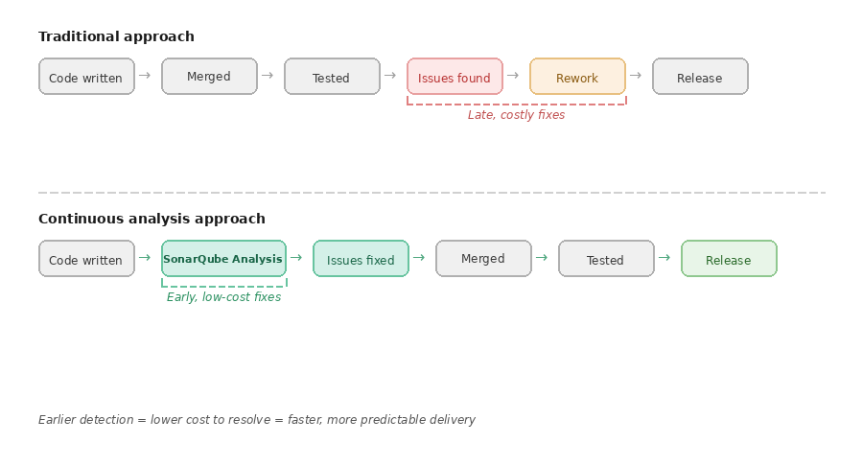
The turning point came with introducing continuous code analysis into the development workflow using tools such as SonarQube. Instead of identifying issues late in testing or production, analysis ran automatically whenever changes were committed. The platform evaluated code against rules focused on maintainability, reliability, and security. This gives developers immediate feedback before changes were merged. The key shift was not the tool itself, but when problems were detected. Developers resolved issues while context was fresh; reviewers focused more on architecture and business logic, and quality became a continuous process rather than a periodic checkpoint.
The earlier an issue is detected, the lower the cost to resolve it. Continuous analysis shifts detection from post-merge to pre-merge, reducing rework at every downstream stage.
Business Benefits of Continuous Code Quality Analysis
The outcomes were measurable and appeared quickly. Within the first two release cycles, critical code vulnerabilities were reduced by over 50% as developers addressed security risks earlier in the development process rather than discovering them during testing or after deployment. Post-release bug fixes dropped by nearly 40%, directly reducing the rework costs that consume significant time and budget in active software delivery. Code review cycles became more focused, and fewer defects reached later testing phases resulting in faster, more predictable releases. Since rework and late-stage defect resolution are among the largest hidden costs in software delivery, these improvements translated directly into a lower total cost of ownership for the platform over time.
Research from the DORA DevOps program consistently highlights the relationship between software quality, delivery performance, and organizational effectiveness. https://dora.dev/research/
Best Practices for Continuous Code Quality Analysis
Organizations adopting this approach can focus on a few key principles:
Shift Quality Checks Earlier
Problems detected during development are significantly cheaper to fix than those found after release. Earlier feedback reduces the cost of correction at every stage.
Focus on Trends, Not Individual Warnings
The objective is improving overall code health over time. Tracking improvement trends across releases is more valuable than eliminating every warning immediately.
Make Quality Visible
Dashboards and reports help teams identify recurring patterns and demonstrate progress both internally and to stakeholders who care about delivery reliability.
Enable Developers with Continuous Feedback
Automated analysis is most effective when treated as a feedback mechanism rather than a compliance gate.
How Does Continuous Code Quality Analysis Reduce Technical Debt?
Continuous code quality analysis reduces technical debt by identifying duplicated code, maintainability issues, security vulnerabilities, and architectural weaknesses early in the development lifecycle. Early detection prevents issues from accumulating and becoming costly to fix later.
How Does SonarQube Improve Software Quality?
SonarQube improves software quality by automatically analyzing source code for bugs, vulnerabilities, code smells, and maintainability issues. Developers receive immediate feedback, helping teams improve reliability, security, and long-term maintainability.
Learn more about SonarQube:
https://www.sonarsource.com/products/sonarqube/
What Are the Benefits of Continuous Code Analysis?
The benefits of continuous code analysis include faster releases, reduced technical debt, improved software security, lower maintenance costs, more reliable deployments, and higher developer productivity.
Conclusion: Making Quality a Continuous Practice
Code quality rarely deteriorates overnight. It declines gradually through small compromises made under delivery pressure. By integrating automated code analysis into development workflows, organizations can identify these compromises early before they accumulate into larger risks that slow delivery, increase defect rates, and raise the total cost of maintaining complex systems.
For any business investing in software, the value is straightforward: faster, more reliable releases and a lower total cost of ownership. The cultural shift that continuous quality analysis enables making quality an ongoing part of development rather than a final checkpoint is where that return on investment is realized.
Read more about our Quality Assurance Services and Application Modernization Services for strategies that improve software reliability and reduce long-term maintenance costs.
Frequently Asked Questions
Continuous code quality analysis is the practice of automatically evaluating source code for maintainability, reliability, security vulnerabilities, and technical debt throughout the software development lifecycle.
SonarQube helps development teams identify code smells, security vulnerabilities, bugs, and technical debt through automated code analysis. It provides actionable feedback that improves maintainability and software quality.
Code quality directly impacts software reliability, maintainability, security, and delivery speed. Poor code quality can increase technical debt and raise long-term maintenance costs.
Automated code reviews help teams identify issues earlier, reduce manual review effort, improve code consistency, strengthen security, and accelerate software delivery.
Yes. By identifying maintainability issues, duplicated code, and architectural weaknesses early, continuous code quality analysis helps prevent technical debt from accumulating over time.
Continuous code analysis improves software delivery by identifying issues earlier, reducing rework, improving release predictability, strengthening software quality, and enabling faster deployment cycles.
Technical debt accumulates when maintainability issues, shortcuts, and code quality concerns are left unresolved. As technical debt increases, software quality, delivery speed, and maintainability often decline.