
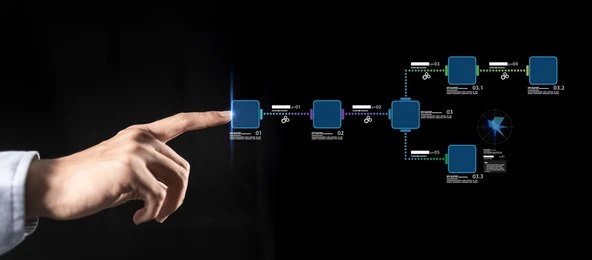
During a recent project at Insight Consultants, our engineering team adopted n8n workflow automation as the orchestration layer for scaling integrations across a modern microservices architecture. What started as an architectural experiment quickly became a foundational decision for improving automation, reliability, and operational efficiency.
At first, the approach felt different. Rather than writing and maintaining multiple integration scripts, we defined workflows visually. Instead of relying on manual triggers, processes ran automatically. And instead of tightly coupled services, we introduced loosely connected, event-driven workflows. As the project evolved, the impact of this decision became increasingly clear.
This article shares that learning experience, not just what n8n is, but how workflow automation with n8n improved scalability, reliability, and operational efficiency in a real-world microservices environment.
Why We Needed More Than Manual Integrations
The project involved multiple services exchanging data across CRMs, databases, internal APIs, and external systems. In the early stages, many of these integrations were handled manually or through tightly coupled logic. This worked initially, but as the system scaled, several challenges emerged:
- Repetitive manual tasks consuming engineering time
- Delayed data synchronization between systems
- Higher risk of human error
- Growing complexity across multiple integration scripts
- Limited visibility into workflow failures
What became clear was this: traditional integration approaches do not scale well in modern microservices architectures. We needed a solution that supported automation, observability, and loose coupling by design.
What n8n Workflow Automation Brought to Our Architecture
Automated and Reliable Workflow Execution
n8n allows workflows to be created visually using nodes that represent actions, triggers, and integrations. Once deployed, workflows run automatically without human intervention. This enabled:
- Event-driven processing across services
- Automatic data movement between systems
- Reliable execution without constant monitoring
The result was a significant reduction in manual coordination and operational risk.
Faster Processing and Lower Operational Overhead
By automating repetitive integration tasks, n8n removed several performance and reliability bottlenecks. Key improvements included:
- Faster end-to-end processing
- Reduced operational overhead
- Improved system responsiveness
- Lower dependency on custom integration scripts
Instead of engineers maintaining glue code, the platform handled orchestration consistently and predictably.
Clear Workflow Design and Better Maintainability
One of the most practical advantages was visibility. n8n’s visual workflow designer allowed our team to:
- See complete end-to-end workflows
- Debug failures more quickly
- Modify logic without rewriting large sections of code
- Onboard new engineers faster
In distributed systems, observability and clarity are as important as automation itself.
Seamless Integration Across Systems
n8n integrates naturally with internal services, APIs, databases, and third-party platforms. This made it easier to:
- Connect multiple systems reliably
- Automate cross-platform business processes
- Maintain consistent data flows across the architecture
Instead of building point-to-point integrations, we established a reusable orchestration layer.
The Broader Impact of n8n Workflow Automation at Insight Consultants
Adopting n8n changed more than our automation layer — it influenced how we approached system design and scalability. Key outcomes included:
- Improved platform scalability
- Reduced manual errors and operational incidents
- Faster business process execution
- Lower long-term maintenance effort
- Better visibility into workflow health and failures
Perhaps most importantly, engineering teams could focus more on building value-driven features rather than maintaining integrations.
Final Thoughts
Like any orchestration platform, n8n comes with a learning curve. But once embedded into the architecture, its benefits become both clear and measurable. n8n is not just an automation tool. It is a workflow orchestration layer that enables scalable, reliable, and maintainable integration in modern microservices systems. For teams building event-driven and distributed architectures, workflow automation is no longer optional — it is a foundational capability. And when implemented thoughtfully, it becomes a quiet but powerful enabler of long-term system resilience.
n8n workflow automation is a platform that allows teams to visually design, execute, and manage automated workflows across APIs, databases, and applications. It is commonly used to orchestrate integrations in microservices and event-driven architectures.
In a microservices environment, n8n acts as an orchestration layer that connects loosely coupled services. It enables event-driven workflows, improves system observability, and reduces the need for tightly coupled point-to-point integrations.
Yes. n8n supports scalable workflow execution, error handling, and monitoring, making it suitable for enterprise-grade automation and integration use cases when deployed with proper infrastructure and governance.
Unlike custom scripts, n8n provides a visual workflow designer, built-in connectors, retry mechanisms, and centralized monitoring. This reduces maintenance overhead and improves reliability and maintainability over time.
Yes. By automating repetitive integration tasks and enabling event-driven processing, n8n reduces manual intervention, lowers error rates, and improves overall system responsiveness and operational efficiency.
When deployed correctly, n8n supports authentication, encryption, and controlled access. For regulated environments, teams should implement governance, audit logging, and strict review processes for all automated workflows.
Teams should consider n8n workflow automation when managing multiple system integrations, handling event-driven processes, or when manual and script-based integrations become difficult to scale and maintain.